Sunday, April 8, 2018

How Poor Marketing Strategies Affect a Business

How Poor Marketing Strategies Affect a Business

Image source: http://www.mckinsey.com/~/media/McKinsey/Business%20Functions/Strategy%20and%20Corporate%20Finance/Our%20Insights/The%20case%20for%20behavioral%20strategy/png_Q2%20BehavioralStrat%20static%20ex%202_rev%20v4_for%20WEB_v5.ashx

How Poor Marketing Strategies Affect a Business

A marketing strategy is the backbone of any business. It generates the required awareness about your products or services among customers. A good marketing strategy should correlate well with the long-term marketing plans and goals of the business.

But, due to a variety of reasons, businesses tend to go for flashy strategies or outdated ones to market their products. This can negatively impact the sales as well as reputation of overall business.

Let us find out where businesses go wrong in choosing their marketing strategy properly.

Lack of marketing expertise
A marketing plan devised for a business should be organized in a way, such that it complements the goals and resources of the organization. But many businesses become over ambitious and go for extreme marketing campaigns that are not necessary for their business type. This leads to depletion of funds, which can be used for other purposes.

Lack direction
A marketing program will be futile if it fails in targeting the desired audience. Many marketing professionals try to impress the management instead of working on customer preferences and choices. Marketing strategies designed in such manner will have little impact on customers purchasing decision and may lead to poor sales.

Ignoring Internet marketing
A study by Nielsen online and web visible has revealed that 44% of the small businesses in US are not having websites. This is a very high number considering the extent of Internet penetration in the country.

Even if they have a website, many of them are unable to leverage the benefits offered by Internet. Here are some reasons for it:
Do not update websites regularly
Many businesses do not update their websites regularly. Customers are exposed to information that is two or three years old, and in some cases the content they display remains outdated. This leads to a loss of potential customers who browse their website for the latest products in the market.

Neglect SEO
Some businesses assume that setting up a website completes their Internet marketing strategy. They neglect techniques like SEO and PPC campaigns, which are essential in targeting their customers and increasing traffic to the website. Without making use of SEO techniques, a business fails to attract those customers who might genuinely be interested in its products.

Perceive it to be expensive
Though Internet marketing is inexpensive compared to traditional marketing strategies, many businesses perceive it to be expensive and beyond their financial reach (mainly due ignorance). If used effectively, a website also provides a platform for businesses to sell online.

Below par customer service
Businesses can make use of customer service as a good marketing strategy. Delighting customers will create a favorable impression in their minds and motivate them for repeat purchases. This would even encourage word of mouth advertising for your business. A business does well even during testing times when the customers are served politely, professionally and in a fair manner.

A good marketing strategy guides a business in taking their products closer to the customers. Businesses must focus their marketing efforts in such a way that customers can easily relate the product or service to their requirements.

Author's Bio: 

Marketing Guru India provides information on state of marketing in India, history of evolution, and current developments in marketing India. It educates people at ground level to know what marketing really is and to understand the importance of marketing. It also focuses on the topic, marketing vs sales, since marketing is commonly misunderstood as sales in India.

Thursday, March 15, 2018

Why The 2nd Amendment is so Important to Our Freedom

Why The 2nd Amendment is so Important to Our Freedom

Image source: https://img.haikudeck.com/mg/1B99C445-2EF4-442F-A34B-78DB32A6D86E.jpg

The 2nd Amendment forms part of the Bill of Rights of the United States of America. This particular amendment protects the right to keep and bear arms which means that the people has the right to bear arms for their defense, their own state, or the United States, and of course to kill games. It prohibits any law to be passed with the aim of disarming the people unless a crime has been committed, or they pose a real danger to the public. Until this day, the 2nd Amendment still stands despite the censorship of its detractors and seems that it will be staying for good under the protection of the Bill of Rights.

When it was first drafted, the idea is to have a universal militia during the 1790's because it is very expensive for the government to bring guns to all of the members of the militia. They say that this right originated from the English courts where the king requires his subjects to bear firearms for military duty. During that time, they don't have a regular army and police force so certain men had to keep watch and ward at night to keep the peace in the communities, hence the need to keep an assault rifle in the house of certain men. These men are tasked to ward off bandits and to capture and confront suspicious persons.

The only difference is, the 2nd Amendment does not discriminate against social classes unlike with the English where only the wealthy are able to bear arms. It should also be emphasized that in arming the militia, which is a natural defense of any free country against invasions, or any uprising that will jeopardize the peace and democracy in a country, the right against usurpation and arbitrary power of rulers within or outside the country can be impede and eventually discouraged. Some historians and philosophers say and believe that injustice in a country will be exerted unless forcibly resisted. Having the right to bear arms gives the ammunition to make sure that injustice does not happen - figuratively and literally speaking.

With the advancement in technological warfare, the classes of guns supported by the 2nd amendment have also grown in number. It includes ak47 and m16 riffles. The registration process has also improved with all the requirements necessary for a person to acquire a gun. There are also individuals who are prohibited from carrying a gun because the court does not see them fit to carry a weapon that may cause harm to a multitude of people.

Even if the 2nd Amendment was created to further the rights and liberty of the people, it can also very easily cause the violation of the rights of people facing the other end of the barrel. Despite this possibility, the 2nd Amendment has done more good than harm to the people and the state. There are enough regulations to keep it and its consequences in check. All in all, it has promoted liberty and uphold the rights of the people.

W J Snyder has a love for WW2 military history guns, so much so that it inspired him to design and create t shirts based on these interests. To see his designs goto: PRO GUN T SHIRTS and ACHTUNG T SHIRT PRO GUN BLOG.

Wednesday, March 14, 2018

Why Stress Can Be A Cause To Impotence

Why Stress Can Be A Cause To Impotence

Image source: http://www.touchforcanceronline.com/wp-content/uploads/2016/05/causes-of-ed.jpg

Stress has become an inevitable consequence of modern life, and we are subjected to increasing amounts on a daily basis. The term stress was originally coined and defined by Hans Selye in 1936 as "the non-specific response of the body to any demand for change." This means that we are all subjected to stress, but its effects on our bodies differ greatly from person to person, largely dependent on the gravity of and how we handle the stressful situation. Selye determined that there were two kinds of stressors, positive and negative. Positive stressors, or eustress, are situations that are perceived to be happy or good, such as weddings, childbirth or big family holidays. Negative stressors, or distress, are situations that are traumatizing or unhappy, such as the death of a loved one or an accident. But whether the situation is positive or negative, this rate of wear and tear we subject ourselves to eventually takes its toll on our bodies, and how we deal with the stress is important.

Stress has become one of the leading causes of health problems. It manifests itself in any number of physical or psychological symptoms that are often ignored until it seriously affects our health. The increasing number of stress-related illnesses has raised alarm bells throughout the worldwide medical community.

One of the health conditions that is caused by stress is sexual impotence. Also referred to as erectile dysfunction (ED), sexual impotence commonly affects sexually mature males and is marked by the inability to obtain and/or maintain an erection hard enough for successful sexual intercourse. Among the reasons for impotence are smoking, alcohol abuse, pelvic trauma, hormonal deficiency, or conditions such as diabetes and cardiovascular disease.

Psychological impotence is most often caused by stress, usually stemming from work, financial burdens, family life, general preoccupation and exhaustion. It may also be caused by depression, mental illness, traumatic incidents such as sexual abuse or post-traumatic stress disorder (PTSD). In order to help someone suffering from sexual impotence, it is important for a patient to undergo counseling to uncover the hidden cause from which the condition stems from. This may help identify if the underlying reason can be removed or its effect reduced through appropriate treatment.

Because mental stimulation plays a major role in sex, both in its overall enjoyment and in mediating the physiological pathways of arousal, a person's mental health is important in recovering from psychological impotence. This is because stress results in production of certain neurotransmitters in the brain, the effect of which hinders erection and the ability to feel aroused. Sometimes the condition is even aggravated by the patient's feelings of shame and inadequacy when the first symptoms of this condition manifest. This is the time when they most need the love and support of their partners, who are often encouraged by doctors to attend the counseling sessions. Stress-induced psychological impotence is very treatable and more often than not requires a change in the affected couple's lifestyle and habits. Both partners must willingly accept these changes to ensure the over-all wellness of the patient as well as the security of their relationship.

Visit the Health And Nutrition Tips website to learn about bowel movement problems, bowel spasm, irritable bowel syndrome, tailbone pain, broken tailbone symptoms , treatment for broken tailbone and other information.

Why Some Children Don't Like to Read

Why Some Children Don't Like to Read

Image source: http://slideplayer.com/9414478/28/images/4/Reading+Everything%21.jpg

Are you troubled by your child's disinterest in reading? Maybe you have a young child just learning to read. You try to encourage the learning by reading together. However, each reading session is a struggle. Your child shuns it like a hated vegetable . Or maybe your child can already read, but just doesn't want to. They even tell you straight in your face, "I hate reading."

How did it come to this? Why does your child dislike reading? Basically, it comes down to one thing: the love for reading was never ignited or have been extinguished. Here are 8 ways to kill a child's love for reading:

1. Reading sessions are more like drilling sessions. Don't quiz and test children when reading. It's ok to point things out and ask questions to promote thinking but make sure it stays FUN. Don't turn it into a pressurized teaching session. Yes, you hope that they learn something from the reading but don't make that your main objective. Read to enjoy the story. Learning usually takes place when the teaching is not so obvious.

2. Television, video and computer games takes center stage when it comes to relaxation and entertainment. These strongly distracts children from reading. There needs to be a limit to these activities if you want to convince them that books can be entertaining too.

3. Reading books that are too difficult for their reading level. It is very discouraging for children to open a book and not know how to read many of the words. Where is the joy when you struggle to get through a page? Know your child's reading ability and get books appropriate to their level.
4. Reading sessions turn into screaming and put down sessions. Parents need to hold realistic expectations of their children. Control frustrations when children don't excel as fast as you wish they would. Watch your tongue and avoid derogatory remarks such as "Can't you remember that word, we just read it," or "I've told you many times already. What's wrong with you?"

5. Reading books that are of no interest to them. How do children regard these books? BORING! To a young boy, reading a book on dinosaurs may be more captivating than reading a book about Dick and Jane. Draw your teenagers into reading with books that they can relate too. I know when I was that age I was game for books on love, romance, and friendship. Capitalize on your child's hobbies and interests.

6. Forced reading. for older children, sometimes homework is in the form of assigned readings. Usually a report has to be handed in at the end. Although this is done under good intentions, it is easy for a child to regard reading as a chore to be done. Very likely too, the assigned reading is not of their choice and therefore, not of their liking. Reading in this situation is like dragging feet in the mud.

7. Peer pressure. This is another factor that affects older children. Kids can be cruel with their branding and teasing. The term "nerds" and "geeks" are usually thrown at those that indulge in books. Your child may very well choose to shun books just to fit in and be one of the "cool kids."

8. Limiting what children read. Imagine if you loved sci-fi books but was told you could only read classics. What a damper that would be for you right? Be open to what your child wants to read. You may think your child has moved passed picture books but he wants it anyway. Let him. Or you may think reading comic books have less educational value then reading well known novels. Remember, it's a book in their hands nonetheless. So, whether it be fiction, non-fiction, picture books, comic books, magazines etc... be supportive.

You want to get your child reading, you have to first show that it is fun and enjoyable. Don't push too hard to get your child to learn to read or read to learn. Only when there is love for reading can the learning begin.

Go to the Baking Chicken website for information on how to bake chicken. Visit the Boxing Tips website for info on boxing techniques. Want to learn everything on boxing exercises? Visit the Boxing Workouts website.

Why Projects Fail Part 2

Why Projects Fail Part 2

Image source: https://image.slidesharecdn.com/10reasonswhyprojectsfailorcommonmistakestoavoid-140626045644-phpapp01/95/10-reasons-why-projects-fail-or-common-mistakes-to-avoid-23-638.jpg?cb=1403758801

"Directing a Successful Project": the C-NOMIS case study

(This is part 2 of a series of 10 posts: Why projects fail?)

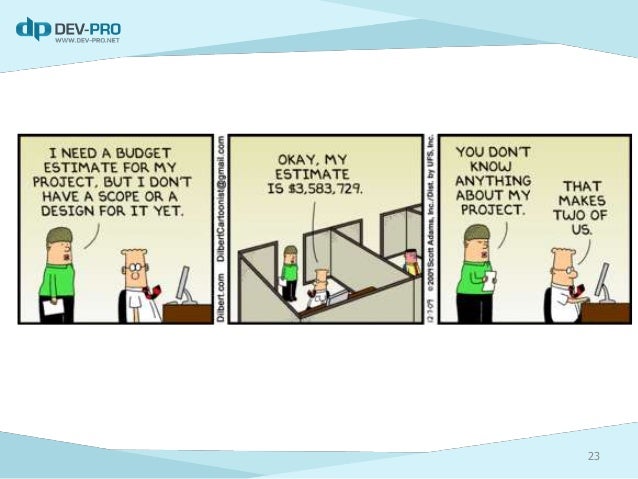
This post deals with the second of the OGC's eight causes of project failure: the lack of effective or clear senior management, ownership or leadership at higher levels within the organisation.

The PRINCE2 project management methodology recognises 4 levels of project-related management:

* Team manager (ground-level operations)
* Project manager (manages the day-to-day project decisions)
* Project board (responsible for decisions outside the project manager's scope, for example, dealing with exceptional risks or requests for change)
* Programme/corporate management (responsible for the integration of the project into the wider programme or business strategy)

The final management level actually falls outside of project management, but effective programme/corporate management is crucial for ensuring that a project makes coherent business sense.

According to the NAO report, the C-NOMIS project has been overseen by three different SROs (Senior Responsible Officers), the first of whom had very little prior experience working with large-scale IT systems projects. A further element of confusion was added by the fact that NOMS - the organisation running the project - was a recent amalgamation of HM Prisons, the National Probation Service and various other government offices and organisations, all of which came with their own management structures and their own ways of doing things.

The consequences of this confusion were as follows:

* Poor monitoring by senior management

Neither the project board nor the SRO requested or received any information about the project beyond standard summaries and briefings until mid-2007. There is no evidence during this period that senior management monitored the delivery of the product.

* No clear financial accountability

Although the project board met once every two months, the records show that there was no discussion of project finances until May 2007 - by which point the estimated cost of the project had almost tripled to 690 billion.

* Weak change control

One key reason for the increasing costs and delays was the "scope creep" allowed on the final product (the integrated database). This was partly caused by having various requirements from the different departments and no central figure of authority to ensure that the requirements were compatible, achievable and necessary to the project objectives. Scope creep can be fatal for a project in the Business Case is not regularly reviewed, as it changes the cost/benefit balance - often for the worse.

Summary and solutions

The newly-updated PRINCE2 guidance includes the release of a PRINCE2 manual aimed particularly at senior managers, who need to understand the basics of the PRINCE2 method and their PRINCE2 responsibilities. This manual is called Directing a Project, and may eventually lead to an additional qualification particular to project board members. You may learn more details about how projects should be directed by attending PRINCE2 training.

The MSP programme management methodology and certification is also an invaluable source of best-practice guidance for individuals new to senior project management roles and responsibilities.
Looking ahead ...

The lack of clear senior management, leadership and ownership on the project was a key factor in the failure of C-NOMIS. In my next post I am going to look at the third of the causes of project failure - no effective stakeholder engagement.

Tuesday, March 13, 2018

Why Millennial Investing Is Trending Away From Stocks

Why Millennial Investing Is Trending Away From Stocks

Image source: http://9639-presscdn-0-85.pagely.netdna-cdn.com/wp-content/uploads/2015/03/How-to-Play-the-Stock-Market-Correction-2.jpg

Whether theyre killing the golf industry or changing the way business is done, Millennials are changing everything.

And that includes investing.

For years, most investors have put their money in the stock market. With the influx of Millennials into the financial sector, that is slowly changing.

According to a survey by Goldman Sachs, only 18% of Millennials see the stock market as the best way to save for the future. 40% have no interest in the stock market at all.

In this article, well take a look at the top trends in Millennial investing and try to understand where the market is headed.

Millennials Have Seen the Market Crasha Few Times

Millennials are the generation between age 18 and 35 that grew up in the 90s and 00s. Those two decades saw some huge changes to the economy.

Millennials grew up through the Dotcom and housing bubbles and the burst of those same bubbles. Theyve lived through two recessions.

Weve all seen how the Great Depression had a lasting impact on the financial habits of our grandparents. These booms and busts have had a similar effect on how Millennials make their investments.

Having seen high-risk, short-term investments fail, Millennials are skeptical of the stock market. Despite nearly tripling in the years since the Great Recession, most young investors see this growth as unsustainable.

Millennials Have Less Money to Invest

Its not laziness: Millennials earn lower wages than their parents did. And that is coupled with much higher student loan debt.

With a higher debt-to-income ratio than previous generations, Millennials have less disposable income.

That includes income that would go toward investments.

Millennials invest less because they have less to invest. And what money they do have to invest is less likely to go to the stock market, because

Millennial Investing Prefers Low-Risk Options

Having lived through such chaotic highs and lows, Millennials a healthy skepticism of risky investments. And that includes the stock market.

With less money to invest, Millennials are more careful with their options.

According to a survey by Bankrate.com, thirty-nine percent of Millennials prefer cash investments for long-term financial planning. Twenty-three percent prefer real estate.

Both of which lead the stock market, which comes in at only 19%. This is despite significantly higher returns on investment.

But Millennial investing is more interested in security than ROI. The stock market may have more potential for high gains, but that comes with a healthy dose of risk.

And young investors arent interested

Millennials are Skeptical of Large Corporations

Its no secret that Millennials dont trust big corporations.

As consumers, Millennials are moving their money away from big brands and toward smaller or local companies.

Millennials arent as concerned with economic success as their parents. Instead, they are more concerned with environmental sustainability, economic equity, and product quality.

As a result, they have little interest in cutthroat corporations. Millennials are not impressed by sacrificing quality or cutting wages to increase profits.

And since most local companies dont trade on the Stock Exchange, many Millennials simply arent interested.

One thing is for sure. As they become a larger portion of the economy, Millennial investing habits will have a permanent effect on the financial sector.

Does your website need more traffic? ArticleCity uses data-driven analysis to create content that is sure to increase your SEO and drive customers to your site.

Sign up for free today and join thousands of other marketers!

Related Posts:

How to Design a Successful Promotion Strategy for a
What Are My Business Loans for Poor Credit Options?
10 Health Benefits of Golf (Some May Surprise You!)
How to Save for Retirement While Paying Student Loans

Why Is Legacy Important And How to Achieve It

Why Is Legacy Important And How to Achieve It

Image source: http://image.slidesharecdn.com/whyvideoissoimportanttodigitalmarketing-130109141103-phpapp02/95/why-video-is-so-important-to-your-digital-marketing-and-how-to-maximize-its-effectiveness-1-638.jpg?cb=1357776596

Every year when I visit my cousins in Dubuque Iowa, I see the stone barn that my grandfather built in 1895. It makes me think about the long term affect of what we have accomplished during our lives, and could we have done better? And then these two thoughts bring me to "Why is legacy important for me... for you?" Start with the answer to "Why did you start your business?" Then add to that ten, twenty even thirty years of daily effort.

It has taken focus, diligence, awareness of the market, customers, changing workforce, production issues, constant experimentation with new products, and balancing financial forces to create the business strategy you now have. At some point you started thinking "What's next?" What do I do with this company and these people? I can't do this forever. And what is the point of all of this?

As with my grandfather, our country's founders were in the same position. They started by dealing with the current moment and an intuition about what needed to be done. Then they built into the future. Just as you did, every time they had problems they got creative and solved it. They hoped their daily efforts were building something that would last. They understood that endurance is part of legacy. So is the deeper meaning in things we build that endure.

Legacy is about making an impact that is meaningful and outlasts us. If it's done well, generations later your efforts, creativity, insights, vision, values and wisdom make a valuable contribution to how people are able to live their lives. If those who benefit are your grandchildren and great grandchildren, that is wonderful. If the advantage includes your employees, stock holders, community, and maybe even your customers, that is truly amazing.

Accomplishing a legacy that stretches beyond yearly profits takes several key pieces. First, holding a clearly defined long term vision of the results is a requirement. The second obvious part is doing today with enough skill that tomorrow is possible. The tough part is constantly linking today's actions and this year's initiatives with a five and ten year plan in mind. The almost impossible part is to have a 200 year vision/plan and effectively match that with the core values, systems, and processes for the time steps in between.

The problem spot for almost all legacies is implementation. This is where almost all legacies fall apart. What do you do to teach and inspire the next generation, so that they buy into the long term view through their daily actions that help to achieve and enforce that vision? Start with dialog about your values. Ask them how they define and live their values. Help them learn the daily skills. Always ask (because leadership development requires independent self-directed followers) what they see is possible and how they plan to accomplish that. Challenge them to grow.

Above all teach them the skills to invest with wisdom and wealth skills for the long term. After all, money is only a tool for our future, and the legacy we can leave is the meaning we have created with it. That is what my barn building grandfathers taught their grandsons, the long view and how learning, values and tools build legacy.

Legacy: anything handed down from the past, as from an ancestor or predecessor: the legacy of ancient Rome.

How To Get Your No-collateral Unsecured Loan Immediately

Image source: http://www.bankofd3.com/wp-content/uploads/2016/09/Personal-Loan.jpg How To Get Your No-collateral Unsecured Loan Immediately ...